Growing mushrooms: species, problems, storage, with sources
Short answers about growing mushrooms at home: which species suits your space, what to do when something goes wrong and how to store your harvest. Every answer lists its source, so you can check for yourself where it comes from. With the chooser tool you pick species and get a shopping list and a set-up.
Species to grow
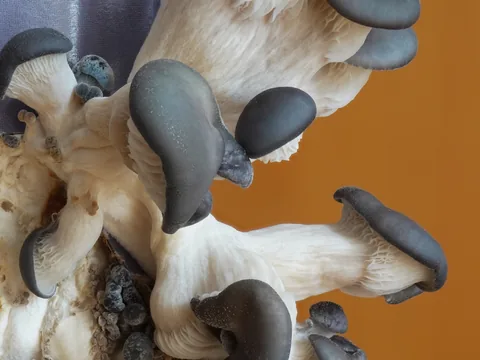 Growing oyster mushrooms
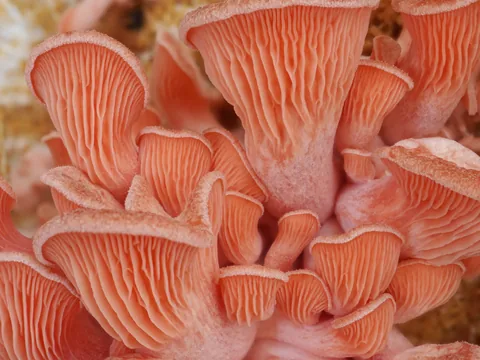 Growing pink oyster mushrooms
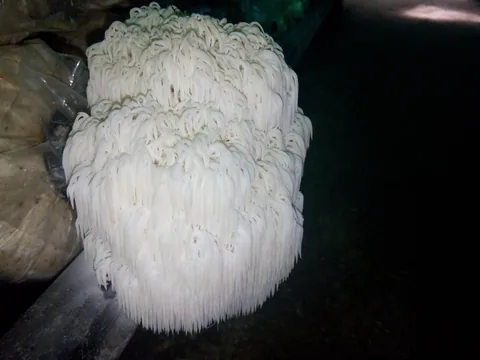 Growing lion’s mane
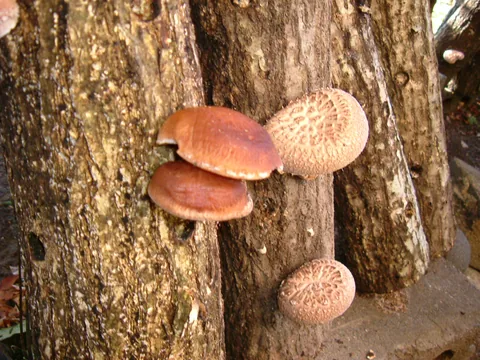 Growing shiitake
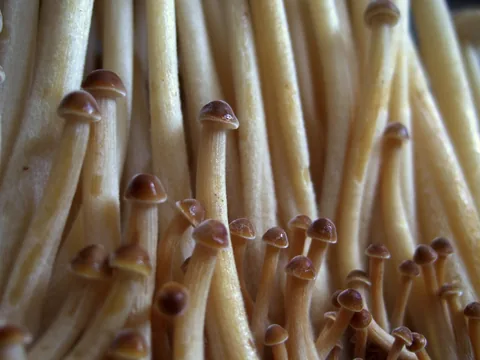 Growing enoki (velvet shank)
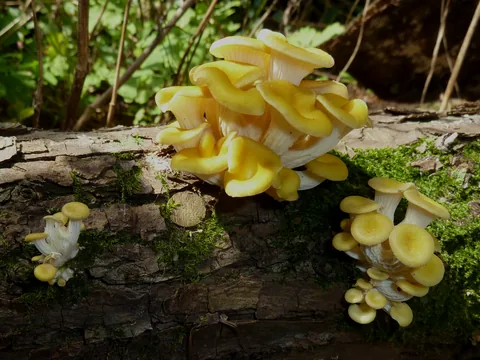 Growing golden oyster mushrooms
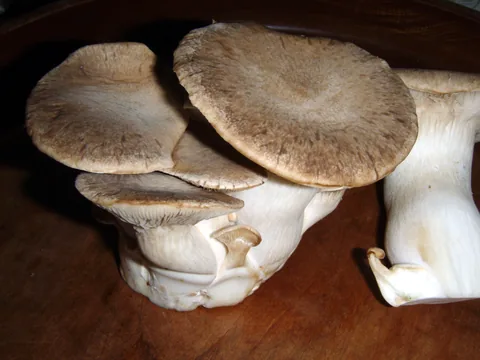 Growing king oyster mushrooms
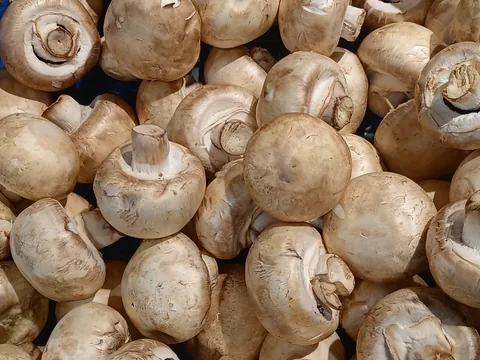 Growing button mushrooms (white and chestnut)
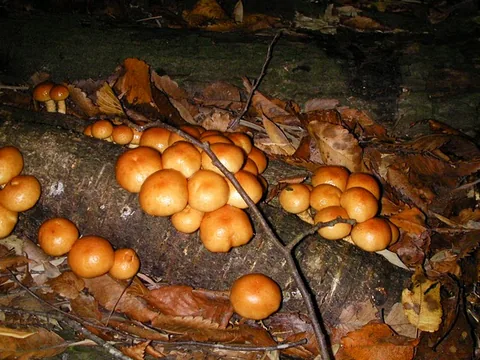 Growing nameko
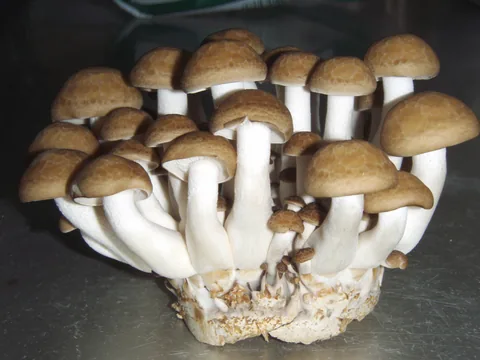 Growing shimeji (beech mushroom)
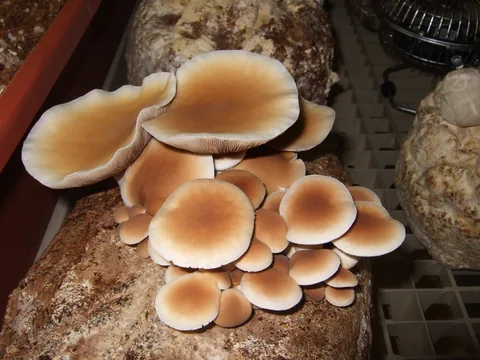 Growing pioppino
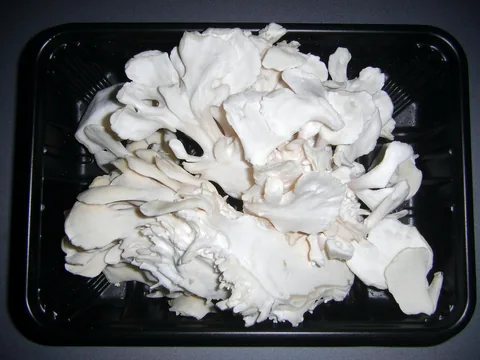 Growing maitake (hen of the woods)
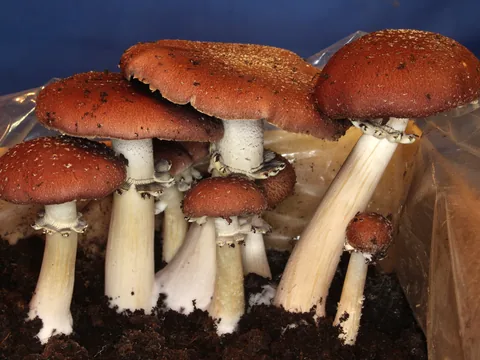 Growing wine cap mushrooms
Growing methods
Is it possible?
Troubleshooting
Harvesting and storing
Key terms
Frequently asked questions
Which mushrooms can I grow at home?
The guide has a page for 13 species, from oyster mushroom and shiitake to lion's mane and maitake. The oyster mushroom is the easiest species to grow at home.
What temperature do mushrooms need?
It depends on the species and the stage. The chart on this page shows the guide ranges from the sources, from cool to warm, for colonisation and for fruiting. Always follow the temperature given for your own kit.
Can I grow chanterelles or porcini myself?
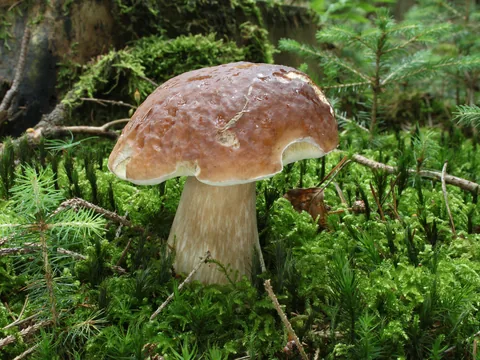
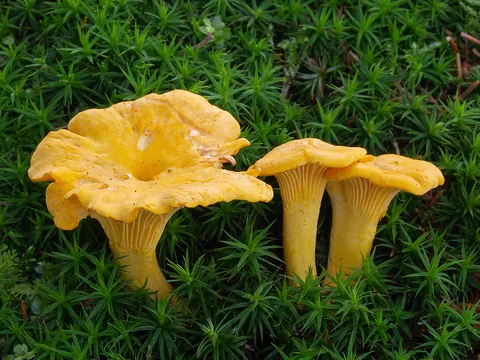
No. Chanterelles and porcini live in partnership with the roots of living trees. They do not grow on a bag or log, and chanterelles are hard to propagate even in a lab.
What about morels or truffles?
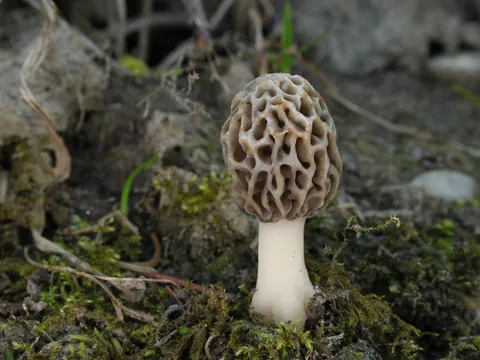
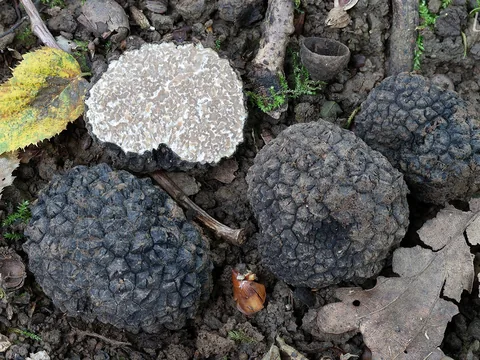
There is no reliable home or cellar method for morels. Truffles only work as a truffle orchard: an inoculated hazel on chalky soil and years of patience, with no guarantee.
There is green mould on my grow block. What now?
The guide rates green mould as 'serious': act at once and sometimes throw the block away. White powder around an oyster kit or amber droplets on the block, on the other hand, are normal: just carry on.
Where do the answers come from?
Every answer shows its source, so you can check where it comes from yourself. What we infer ourselves is marked separately.
Image credits
All photos come from Wikimedia Commons under an open licence. They illustrate a species and are not evidence or an identification aid.
- Growing shimeji (beech mushroom) · Photo: Apple2000, CC BY 3.0, via Wikimedia Commons · source
- Can you grow chanterelles yourself? · Photo: Andreas Kunze, CC BY-SA 3.0, via Wikimedia Commons · cropped · source
- Can you grow porcini yourself? · Photo: Holger Krisp, CC BY 3.0, via Wikimedia Commons · source
- Growing enoki (velvet shank) · Photo: Wendell Smith, CC BY 2.0, via Wikimedia Commons · source
- Growing golden oyster mushrooms · Photo: Chatama, CC0, via Wikimedia Commons · source
- Growing oyster mushrooms · Photo: Zinnmann, CC BY-SA 3.0, via Wikimedia Commons · cropped · source
- Growing button mushrooms (white and chestnut) · Photo: Fumikas Sagisavas, CC0, via Wikimedia Commons · source
- Growing king oyster mushrooms · Photo: Apple2000, CC BY 3.0, via Wikimedia Commons · source
- Growing maitake (hen of the woods) · Photo: Kuha455405, CC BY-SA 3.0, via Wikimedia Commons · cropped · source
- Can you grow morels at home? · Photo: Holger Krisp, CC BY 3.0, via Wikimedia Commons · source
- Growing nameko · Photo: Hillbourne, CC BY-SA 3.0, via Wikimedia Commons · cropped · source · Photo: Qwert1234, Public domain, via Wikimedia Commons · source
- Growing pioppino · Photo: Wendell Smith, CC BY 2.0, via Wikimedia Commons · source
- Growing lion’s mane · Photo: Plam1234, CC BY 4.0, via Wikimedia Commons · source
- Growing wine cap mushrooms · Photo: Holger Krisp, CC BY 3.0, via Wikimedia Commons · source
- Growing pink oyster mushrooms · Photo: Zinnmann, CC BY-SA 3.0, via Wikimedia Commons · cropped · source
- Growing shiitake · Photo: Sakurai Midori, CC BY-SA 3.0, via Wikimedia Commons · cropped · source
- Can you grow truffles in your garden? · Photo: mycobel, CC BY 4.0, via Wikimedia Commons · source
- Growing button mushrooms (white and chestnut) · Photo: Мыць Денис, Public domain, via Wikimedia Commons · source


